 Christine Rogador
Portugal, a country in southeastern Europe, is located on the Iberian Peninsula and shares a border with Spain. It is a popular tourist destination due to its pleasant year-round temperature and its exceptional beach scene.
For years, Portugal has been a top choice for tourists from all over the world, and with good reason: the country boasts beautiful rocky beaches, medieval cities, amazing architectural monuments, wilderness landscapes, colorful fishing villages, and the warmth and hospitality of its people.
Portugal is the oldest country in Europe, with a history that stretches back thousands of years. Portugal became a kingdom in the 12th century and had a colorful history for hundreds of years before becoming a republic.
This legendary history is still visible today in places like medieval towns and buildings. The incredible variety of natural and man-made landmarks in Portugal is a testament to the country’s rich history as well.
Many of Portugal’s most famous landmarks date back centuries and showcase the country’s many artistic movements. However, the country is also home to some truly breathtaking natural wonders. Since Portugal is more than just its ancient past, the country also boasts many breathtaking natural attractions.
There is a plethora of fantastic locations in Portugal, from ornate palaces to historic churches to UNESCO World Heritage sites. These landmarks can be found all over the country.
So, whether you’re in Lisbon or Porto, you won’t be short on breathtaking attractions.
15 Famous Landmarks In Portugal
Here’s our rundown of must-see Portuguese landmarks to help you plan your upcoming trip to Portugal.
1. Castle of the Knights Templar, Tomar
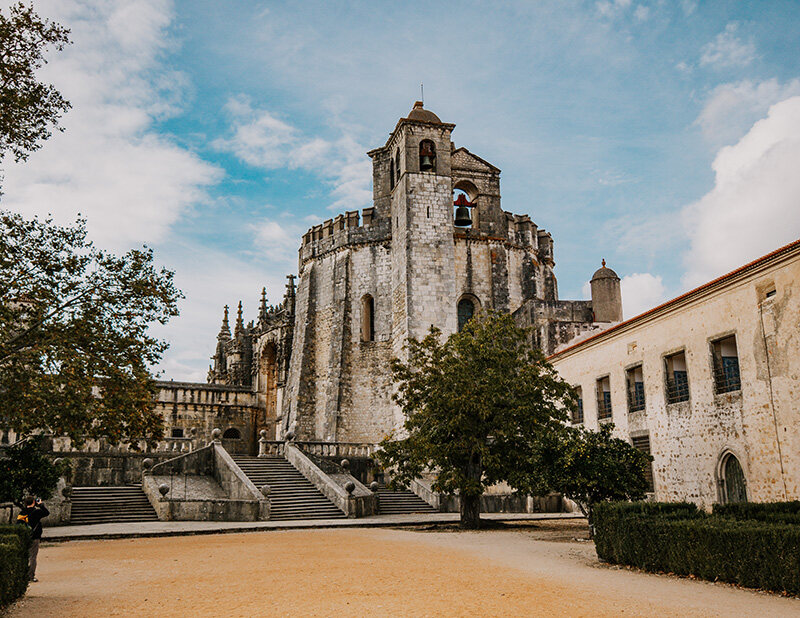
Opening Hours: Daily from 9am – 5:30 pm
Admission Fee: €6 per person
The historic city of Tomar is located just under two hours north of Lisbon. It is home to stunning architecture, fascinating history and a number of iconic landmarks of Portugal. Tomar can easily be visited on a day trip from Lisbon however it is also a great addition to a road trip through Portugal. Getting there can be done by taking the train directly from Lisbon or joining an organised day tour.
The most famous attraction of Tomar is the Castle of the Knights Templar, also known as the Convent of Christ. This beautifully preserved castle dates to the 12th century and is steeped in mystery and legends. Once the headquarters of the Order of the Knights Templar, this UNESCO-listed castle is a must-see on your visit to Portugal.
The Castle of the Knights Templar is open to visitors daily from 9am – 5:30pm and it costs €6 per person to enter. There is a lot to see so it’s best to allow as much time as possible for your visit. Getting an audio guide is a great way to learn the intriguing history behind the place as you explore the inside of the castle and its grounds.
Before you leave, be sure to include a quick stop at the incredible Pegões Aqueduct which is located only 5 minutes from the castle. It was built in the 17th century in order to supply water to the Convent of Christ. This is one of the largest and best preserved aqueducts in Portugal and it’s open to anyone who dares to walk across the top.
Contributed by: Ann Kelly of The Road Is Life
2. Bolsa Palace, Porto 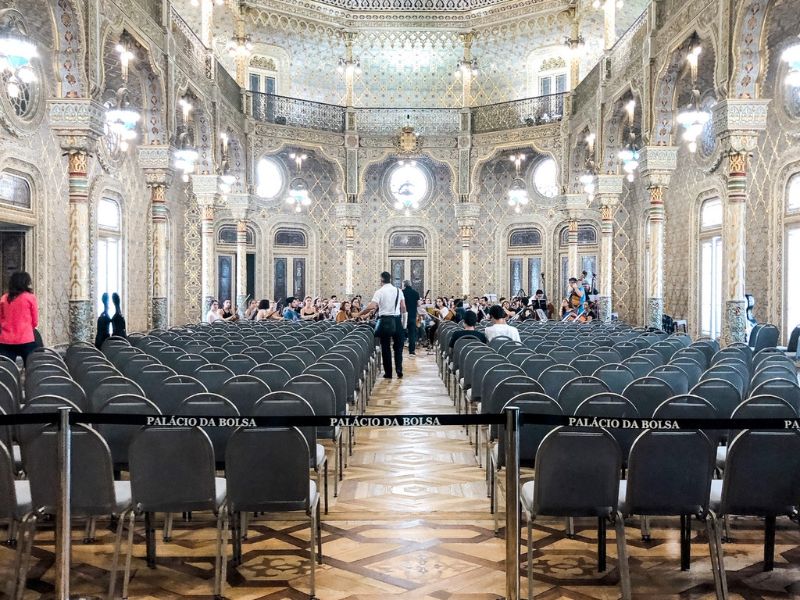
Bolsa Palace Arab Room
Opening Hours: Daily -9:00 am – 6:00 pm
Admission Fee: €10.00.
If you’re spending 2 days in Porto or more, one of the must-sees is Bolsa Palace. It’s a unique highlight of this fun city, and it’s conveniently located in the center of the historic part of the city, classified as a UNESCO World Heritage Site.
The Palacio da Bosla was originally a palace built in the 19th century. It later became the Porto Stock Exchange and is now a tourist attraction known for its history and beauty.
When you first enter, you’ll see a grand main entryway that is two stories high. The floor is covered by an intricate mosaic worth seeing.
The palace has many ornate rooms that have some striking wood-carved furniture. Many of them pay homage to its time as the former Porto Stock Exchange, and they contain some rather interesting artwork.
The real jewel of this palace is the Arab Room. It’s an incredibly ornate room that is breathtakingly beautiful. Every inch is decorated with colorful and gilded tiles in a Moorish Revivalist design.
Foreign dignitaries and heads of state are received in the Arab Room, concerts are held here, and other events occur here as well. The room simply takes your breath away.
Palacio da Bolsa is a popular place to visit so make sure to book tickets online before you arrive. Tours groups are established by the language according to arrival order, so you may need to wait a short while for a group with your spoken language.
Contributed by: Sam Glauser of My Flying Leap
3. Sagres Fortress, Sagres
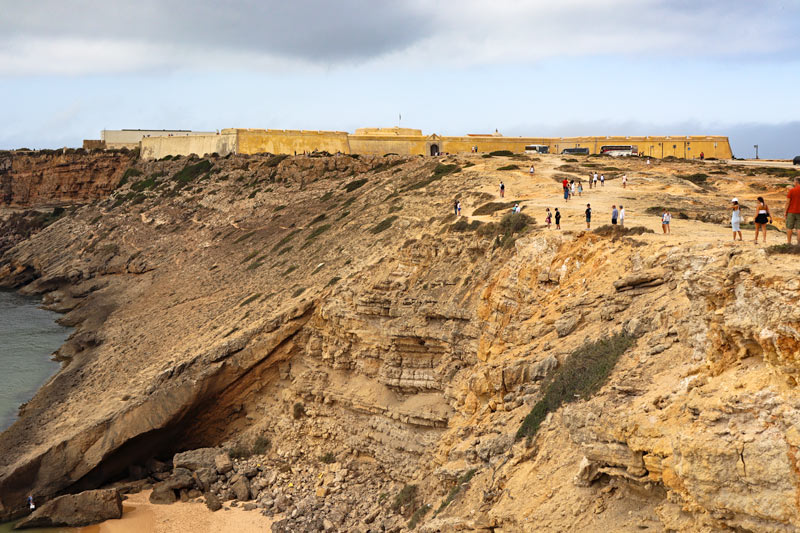
Opening Hours: Daily – 9:30 am to 5:00 pm (October to April) and from 9:30 am to 8:oo pm (May to September)
Admission Fee: €3 per person
Sagres Fortress in the Algarve region is one of the most visited historical landmarks in the south of Portugal. The fortress sits on the top of a rugged cape (Sagres Point) just 1 km outside of the town.
The dramatic location, breathtaking views, and historical importance of the fortress make it one of the not-to-miss places to visit in the region.
The fortress was built in the 15th century by the order of Infante Dom Henry the Navigator. The main purpose of the fortress was to protect the area from attacks coming from Northern Africa.
The first Portuguese expedition to the coast of Western Africa left from Sagres Fortress. It marked the beginning of the Golden Age of Discoveries in Portuguese history.
In 1755 the fortress was significantly damaged by an earthquake and completely restored only in the middle of the 20th century.
The fortress complex includes walls with the gate, the church of Our Lady of Grace, the Rosa dos Ventos circular stone paving, Sagres Lighthouse, A Voz do Mar maze, and several lookout points.
The best way to explore the area inside the fortress is to follow a walking route that goes along the cliffs. It takes visitors to all the attractions. One needs 1-2 hours to visit the fortress.
Sagres fortress is open daily from 9.30 am to 5 pm (October to April) and from 9.30 to 8 pm (May to September). The entrance fee is 3 euros per person.
Contributed by: Alya Akhmetgareeva of The Algarve Family
4. Silves Castle, Algarve
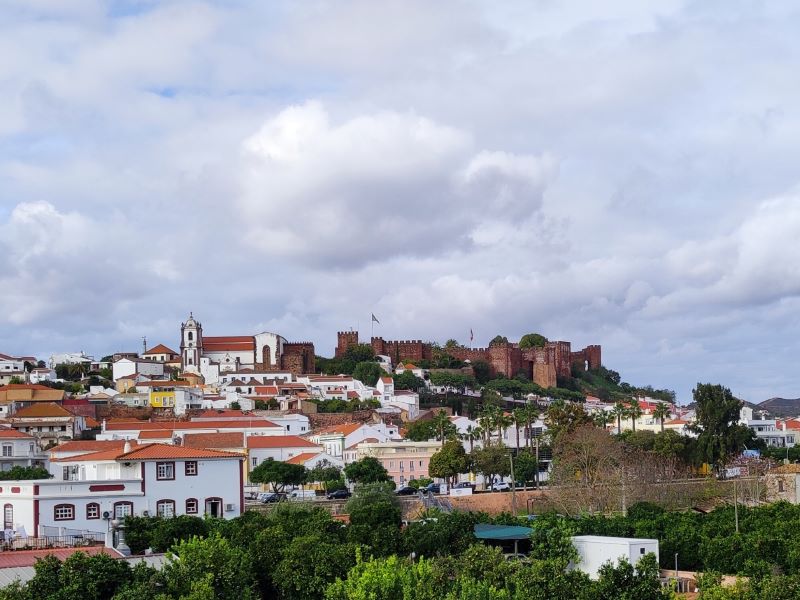
Opening Hours: The opening hours vary depending on the season but it opens from 9:00 am -5:30 pm
Admission Fee: regular price of 2, 80 €, with students, children and seniors enjoying a discounted price
Located in the well-known Algarve region of Portugal stands the Castle of Silves. The historic town of Silves was the capital of the Kingdom of Algarve from the 13th century until 1910. Today, it is a charming hilltop town that attracts thousands of visitors eager to learn more about the history of Portugal.
Silves can be reached on a day trip from the bustling seaside towns of Lagos or Albufeira by bus or train. Alternatively, you can spend a night in Silves to discover the continental Algarve and enjoy a different perspective of this stunning region.
The cobblestone streets lead to Silves castle, standing on the top of the hill overlooking the region and the Arade River. The castle premises take up about 12000 m, making it the largest castle in the Algarve area. The Castle was first built in that spot around 201 B.C., but the way it looks today can be attributed to the Moors who expanded it in the 11th century It is the best preserved Moorish fortification in Portugal and is classified as a national monument.
You can visit Silves castle for a regular price of 2,80€, with students, children and seniors enjoying a discounted price. The Castle is open to visitors every day except on Christmas and New Year’s Day. The opening hours vary depending on the season, but it opens at 9:00 am and closes either at 17:30 in the off-season or 20:00 in the low season. and 22:00 in high season!
Contributed by: Natali – of She’s abroad again
5. Fatima Sanctuary
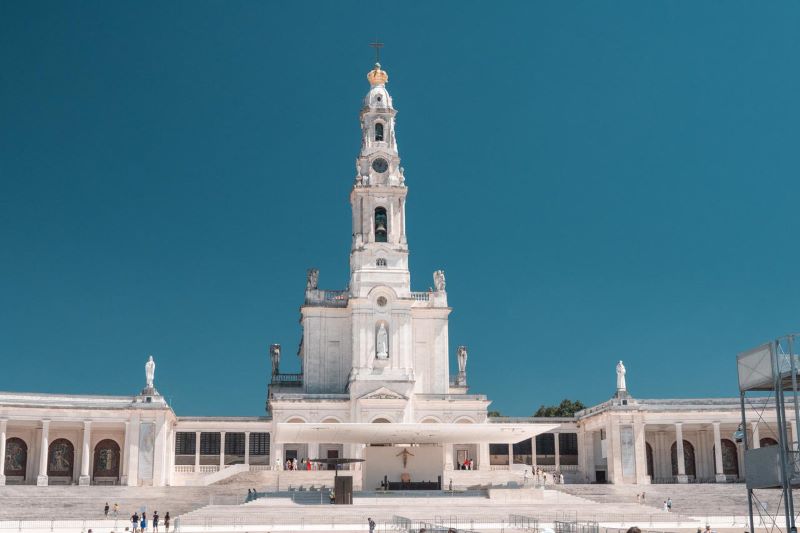
The Sanctuary of Fatima, sometimes also called the Sanctuary of Our Lady of the Rosary of Fatima is located in the small town of Fatima located between Porto and Lisbon and not too far from Nazare. It makes for a perfect stop on your Portugal road trip, especially if you’re interested in seeing beautiful landmarks and historic sites.
The Sanctuary consists of a large church, a massive plaza and several beautiful side buildings made from white marble. It’s a Catholic pilgrimage site and thousands of people come here for religious reasons every month. This is where the Virgin Mary is said to have appeared to three shepherd children in the early 20th century and the sanctuary was built in honor of this event in 1928. However, even if you’re not a religious person the Sanctuary of Fatima is well worth a visit.
Entrance is completely free and you can choose whether you want to spend time in the church or simply wander around the big plaza which is absolutely beautiful. Just keep an eye out for public holidays and religious events which might attract large crowds and should be avoided if possible.
Contributed by: Victoria of Guide your travel
6. Jeronimos Monastery
Opening Hours: Tuesday – Sunday : 9:30 am – 6:00 pm
Admission Fee: $10 but access is complimentary if you have a Lisboa Card.
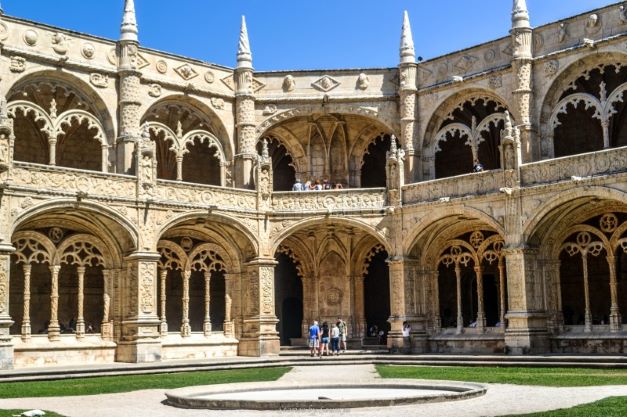
Jeronimos Monastery in Belem is one of Portugal’s most iconic landmarks. Built in the late 15th – early 16th centuries, the monastery (also called the Hieronymites Monastery) is a stunning example of Manueline architecture. Today, the monastery is a UNESCO world heritage site and one of the best places to visit in Portugal.
Jeronimos Monastery was built to honor the maritime victories of Vasco da Gama and his crew. Because it was constructed during Portugal’s Age of Discoveries, you’ll notice the use of several maritime motifs in the design which led to the birth of Portuguese Manueline style of architecture. Nautical ropes, corals, and sea creatures are abundant.
The cloisters of Jeronimos Monastery are beautiful and so is the church. Do not miss the tomb of Vasco da Gama which is placed right by the entrance. The monastery is open 9:30am – 6:00pm, Tuesday – Sunday. Entrance tickets are priced at $10 but access is complimentary if you have a Lisboa Card.
It is common to spend an entire day in Belem so that you can see the Jeronimos Monastery and other attractions such as the Belem Tower and the Monument of Discoveries as well as taste the famous Belem pastry called Pastel de Nata. Traveling from Lisbon to Belem is easy. You can take the tram, train, bus, or even ride a bicycle to get here.
Contributed by: Soumya of Stories by Soumya
7. Belem Tower

Opening Hours: Tuesday to Sunday between 10:00 am – 5:30pm
Admission Fee: €6 for adults, while seniors and students with student ID cards get a 50% discount
Sitting on the bank of the Tagus River in Belem, a neighbourhood of Lisbon, the Belem Tower is one of the most recognizable landmarks in Portugal. This four-storey tower is considered the gateway to Lisbon, as the building greeted Portuguese explorers going on or returning from their voyages to the Portuguese world, such as Brazil, Angola, Mozambique, Macau or Goa.
The limestone tower, about 30 meters tall, came to be in the 15th century as a bastion guarding the mouth of the Tagus. With the wealth flowing back into Lisbon from the Portuguese colonies, the Belem Tower served as a defensive stronghold and a customs control point.
Today, the Belem Tower is one of the must-sees on any Lisbon itinerary and one of the country’s most popular tourist attractions. Visitors can enter the tower and climb a narrow set of stairs winding their way up to the roof. On the ground floor, before taking to the steps, you can see the pits where prisoners were held. Also, try to spot the rhino gargoyle on the western facade – it depicts the first rhino in Europe, which was brought from India to Portugal in 1513.
Reaching the roof terrace provides you with stunning views of the expansive Tagus and the neighbourhood of Belem.
The Belem Tower is open from Tuesday to Sunday between 10:00 -17:30. Entrance costs € 6 for adults, while seniors and students with student ID cards get a 50% discount. The entrance fee for the Belem Tower is included in the Lisbon Card.
Contributed by: De Wet & Jin of Museum of Wander
8. Ponte de Dom Luís I, Porto

An icon of the city of Porto is the Luís I bridge. It’s a double-deck iron arch bridge. The bridge was designed by Théophile Seyrig in the 19th century. The bridge was opened to the public in 1886. Until 1944 there was a toll of 4 reís per person to cross the bridge.
The space between the two decks of the bridge is 44 meters. The lower deck is for cars and pedestrians, the upper deck for pedestrians and the metro. The bridge connects the cities of Porto and Vila Nova de Gaia. The river Douro streams underneath it. The upper deck is perfect for beautiful views on Vila Nova de Gaia, Porto and the river Douro. Porto is a beautiful stop on a France Spain Portugal Road Trip.
The bridge has no toll fee anymore and is open 24/7. The upper deck of the bridge can be reached via Avenue Vimara Peres on the Porto side. The lower deck can be reached through Avenue Gustavo Eiffel. To go from the upper to the lower deck or vice versa, take the funicular dos Guindais. Or just walk up and down.
Contributed by: Cosette of KarsTravels
9. The Castle of Obidos
Opening Hours: April 1st to October 31st: 10:00 am -6:00 pm, Saturdays, Sunday : 11:00am -8:00pm
Admission Fee: €8 euros for adults and €4 euros for children.
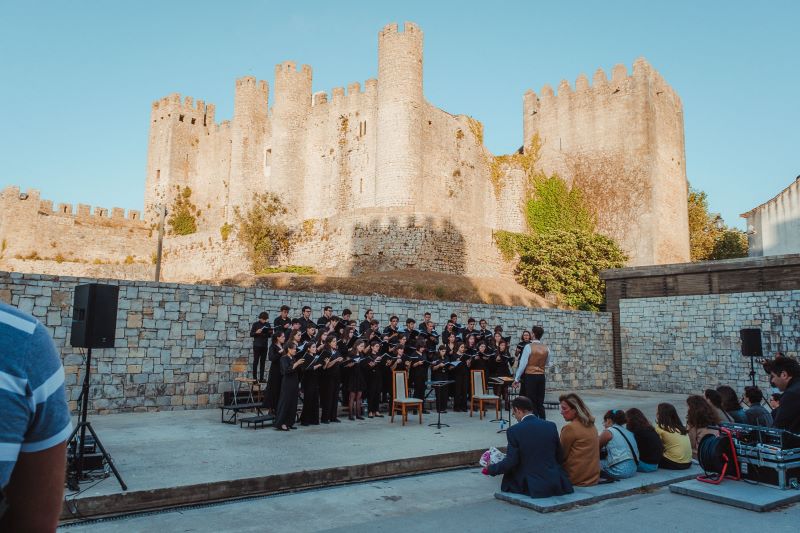
The Castle of Obidos is one of Portugal’s most iconic historical landmarks and the best thing to do in Obidos. It is a must-visit for any traveler to the region, as it offers a glimpse into the country’s rich history.
The Castle of Obidos is a remarkable fortress that stands atop a hill overlooking the city of Obidos. It was built during the 12th century and has been beautifully preserved, making it one of the most famous landmarks in Portugal. Visitors to the castle can explore its grounds, which feature sprawling gardens, winding paths, and a magnificent view of the surrounding countryside. Inside the castle, visitors can tour the dungeons, explore ancient ruins, and visit the chapel where a statue of St. John stands guard.
Whether you’re interested in history or simply looking for a unique experience, the Castle of Obidos is worth a visit.
The Castle of Obidos is open to visitors from April 1st to October 31st, and the opening hours are 10 am to 6 pm. During the peak season from June to August, additional opening hours are offered on Saturdays, Sundays, and holidays from 11 am to 8 pm. Although the castle is closed during the winter months, visitors are welcome throughout the year for special events such as concerts, plays, and festivals. The entrance to the castle costs 8 euros for adults and 4 euros for children.
Contributed by: Chyntia and Alexandrer of Travel Your Memories
10. Benagil Cave
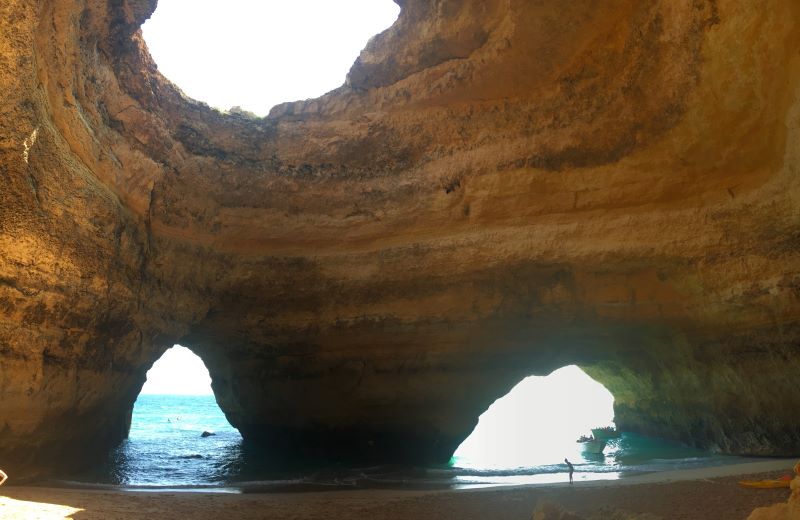
Benagil Cave is one of the most famous and most visited natural landmarks of the Algarve and is a must-see when you are in Portugal. It is a really big sea cave – like a grotto, with a hole at the top and opens up directly into the sea from the sides. Once inside the cave you can walk around as it is covered in sand, it is so beautiful and you can get some amazing photos here!
Benagil Cave is located between Benagil Beach and Marinha Beach. Whilst the cave is only 200 metres from Benagil Beach, you cannot walk to it: it can only be accessed by boat tour, kayaking or swimming there.
There is no entrance fee to enter the cave so the cheapest way to visit is to swim there from Benagil Beach, although this is a tiring swim only recommended for strong swimmers.
The best way to get there is by kayaking, although that is still tiring as the waves can be quite strong! As the cave gets busy during the day, it’s best to do a sunrise kayak tour so you’ll basically have the cave to yourself!
If you plan to go on a boat tour – note that the boat tours just stop at the entrance of the cave for a couple of minutes. They don’t let you get off the boat and explore inside the cave.
Whichever way you decide to visit Benagil Cave you’re sure to have a great time!
Contributed by : Catrina McGrail of 24 Hours Layover
11. Batalha Monastery
Opening Hours: Daily : 9:00 am – 6:00 pm
Admission Fee: €6 and for combine ticket : €15
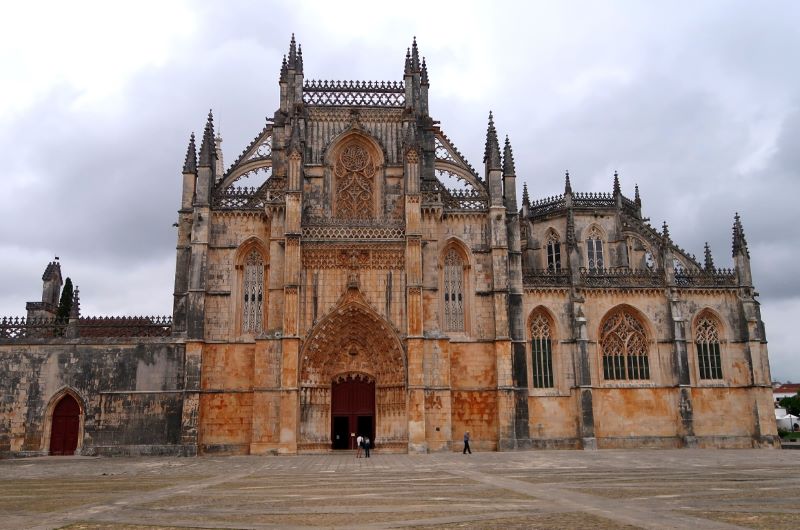
A great landmark to visit in Portugal is Batalha Monastery. Not as famous as some of the other landmarks such as the palaces in Sintra or Belem Tower, but it is a famous landmark nonetheless and forms a trio of UNESCO World Heritage Sites in Central Portugal.
Located in the town of the same name, approximately 150km north of Lisbon, you can easily visit it, either as part of a day trip from the Portuguese capital or via car within an hour and forty-five minutes.
Batalha Monastery is a Dominican monastery, built in the 14th century, and is architecturally, an important landmark in Portugal. It was built in the Gothic style intermingled with some Manueline style as well.
The façade of Batalha is breathtaking and while that is beautiful in itself, the inner areas such as the cloisters are where the real beauty is found. Visitors can enter the main church nave for free but there is a small fee to enter the cloister areas. The monastery is open from 9am to 6pm generally but closes for certain days of the year including Easter Sunday and Christmas Day.
The entry fee is €6 and you can get a combined ticket which allows entry to the other two UNESCO sites of Tomar Convent and Alcobaça Monastery as well as Batalha for €15.
If you are looking for incredible architecture to see in Central Portugal, then make sure you visit the Monastery of Batalha.
Contributed by: Cath of Travel Around Ireland
12. São Jorge Castle in Lisbon
Opening Hours: Daily between 09:00 am and 7:00 pm
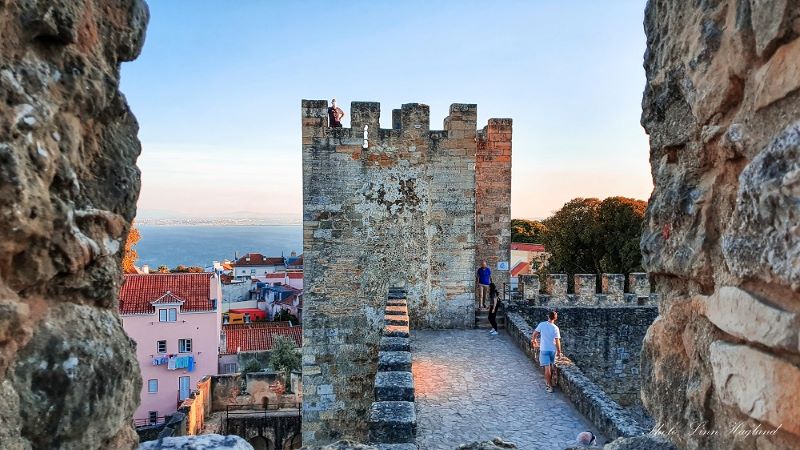
Sao Jorge Castle, looming on one of Lisbon’s seven hills is sure one of Portugal’s most important landmarks. Built in the year 200 BC, it played an important role from Roman times to the Visigots, Arab, and Christians that all gallantly ruled the city.
It is not a surprise that visiting the castle is one of the must-things to add you your Lisbon itinerary. You can still see the cannons on the top of the castle ground and walk the fortified walls that for centuries has protected the city.
Sao Jorge Castle has seen so many wars and conquests, been the seat of power of Lisbon when it became the capital of Portugal, and even Vasco da Gama was received in the castle by the king in 1498. The castle was also damaged by the 1531 earthquake, lost its importance in the 16th century, and later demolished by the 1755 earthquake.
The castle was not begun restored again before the mid-1900s. The entrance fee is 10 Euros, but it is truly worth the visit. You get access to the castle and the castle gardens with epic views of Lisbon and the Tagus River from different angles. The castle is open every day between 09:00 and 19:00.
Contributed by: Linn Haglund of Brainy Backpackers
13. Roman Bridge in Tavira
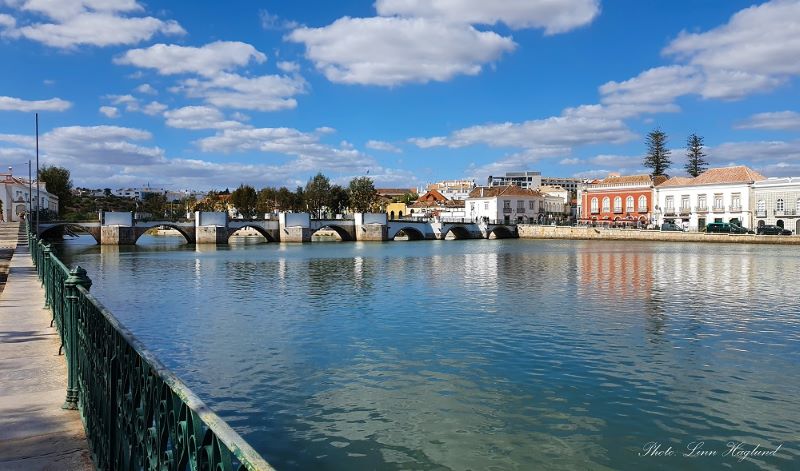
One of Portugal’s landmarks worth seeing is the Old Roman Bridge in Tavira in the Algarve region. Surprisingly, considering the name, the bridge does not have Roman origins, but was first built in Moorish times in the early 12th century.
The bridge was an important part of Tavira’s defense in medieval times as it was part of the main road. Back then, there were houses on the bridge and watch towers on each side. It is also said that the bridge had a wooden removable floor as an extra safety feature.
However, in 1655, the bridge collapsed. It was rebuilt to what you see today, but was destroyed by a flood in 1989 and had to be restored again. Before the last collapse, the bridge was used by cars and pedestrians, but after the rebuild, it has only been a pedestrian bridge.
This makes it a peaceful bridge to cross which is also one of the top things to do in Tavira as it connects the two sides of town. The old fisherman’s quarter and historical sites are on one side and the center for restaurants and bars is on the other side.
Contributed by: Linn Haglund of Amused by Algarve
14. Bom de Jesus
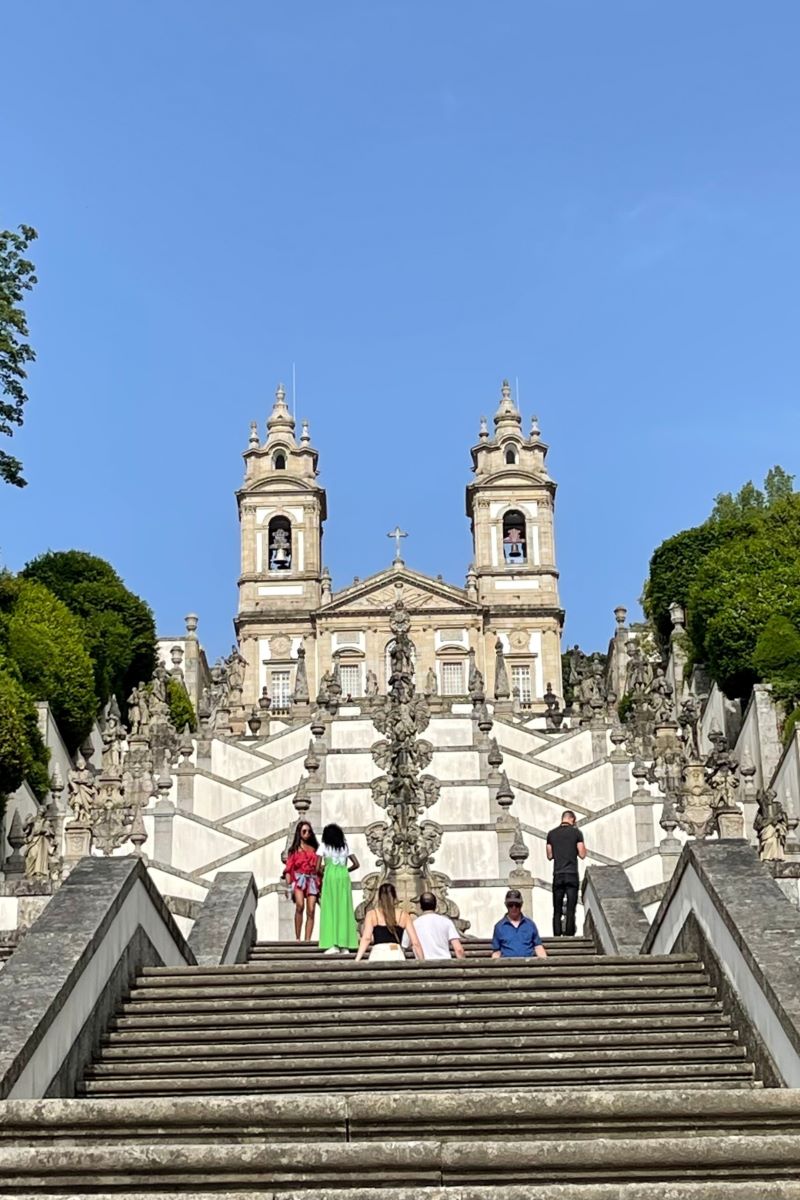
When spending a day in Braga, a city in Northern Portugal, you cannot miss one of the most famous landmarks in Portugal: the Bom de Jesus. This magnificent cathedral is located in the hills of Tenões and accessible from the city center of Braga.
Braga is often referred to as the “Rome of Portugal” because of its historic churches, monasteries, and other religious sites. The Bom de Jesus is the most popular of these religious monuments and is one of Portugal’s finest baroque works.
The Bom de Jesus is most well-known for its Stairway of the 5 senses located at the entrance. This stairway is lined with statues of the five senses, representing taste, sight, hearing, touch, and smell. It is said that believers would pilgrimage up the stairs on their knees to empathize with the pain of Jesus’ sacrifice.
The staircase leads up to the main hall which houses an altar with beautiful carvings and sculptures of saints as well as some intricate paintings depicting religious scenes. From the top of the hill, viewers can also see all of Braga–a majestic view indeed!
To get to the Bom de Jesus, you can take bus #2 or taxi from Braga city center. The journey is about 15 minutes and offers beautiful sights of the area along the way.
Once you arrive, you can either climb the 577 steps up to see the cathedral, or you can pay 2 Euros and take the only water-fueled funicular up. Entrance to the Bom de Jesus is free, however, the church is active so you may run into services depending on when you visit.
Visiting this landmark is sure to be an unforgettable experience that will make for great memories!
Contributed by: Pafoua of Her Wanderful World
15. Peña Palace in Sintra
Opening Hours: Daily : 9:30 a.m. until 6:30 p.m.
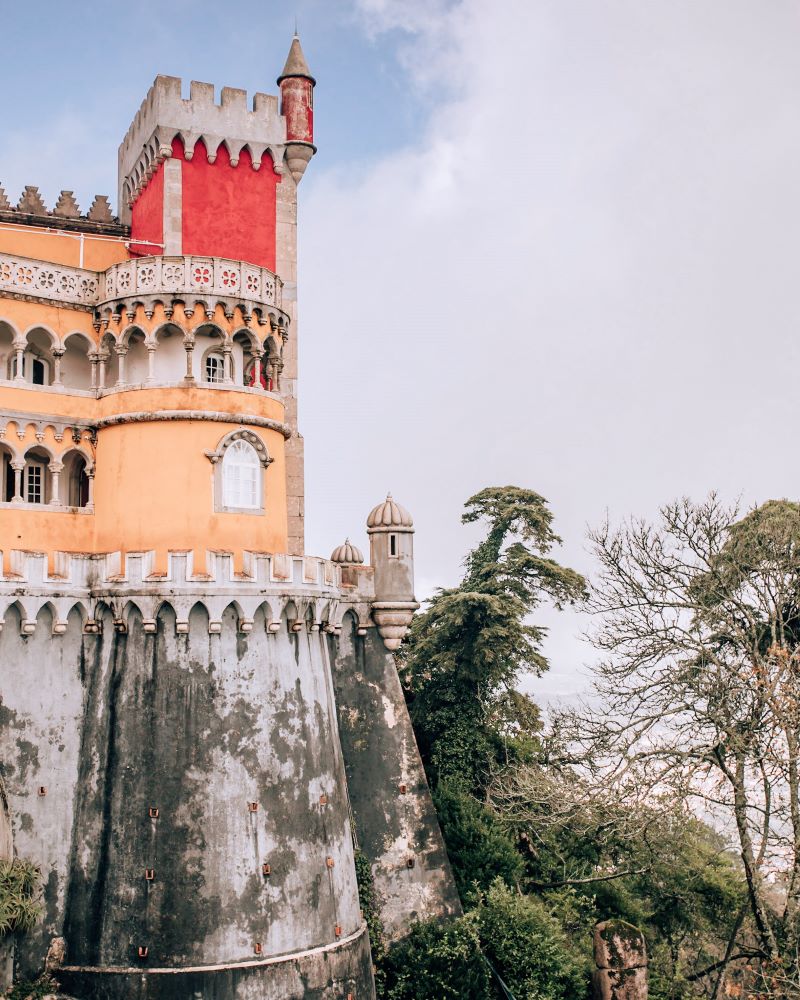
Pena Palace is a must see landmark on a Lisbon to Sintra day trip. At less than an hour away, you can take a bus or train to get there.
Built in the mid-1800s by King Ferdinand and Queen Maria, the vibrant yellow and red paint faded over the years. For a while, Pena Palace was actually a gray color. Thankfully it was repainted in 1996 to the original yellow and red colors.
While at Pena Palace, don’t just spend time at the palace. The surrounding park is beautiful as well and has trails you can walk through to enjoy the shade and a quieter area in Sintra.
You can go inside the Palace itself or just walk around the outside of the palace to see the architecture and famous colors. Expect crowds to be there, especially in the summer and on weekends.
While Pena Park is open from 9 a.m. until 7 p.m., the palace is open from 9:30 a.m. until 6:30 p.m. There are a variety of ticket options depending on what other nearby landmarks you choose to visit. The Moorish Castle is nearby and an easy one to visit. Quinta de Regaleira is another favorite in the area with the famous well.
While Sintra is full of beautiful castles, Pena Palace is one of the most famous landmarks in Portgual.
Contributed by: Christine Wheeler of Live Love Run Travel


